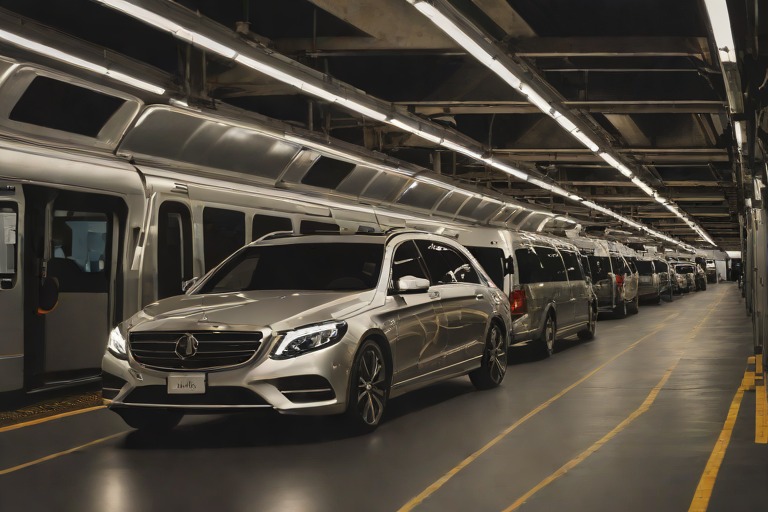
Powertrain Lifecycle Reduction in Up-Armored Executive Vehicles: An Engineering Analysis
Mass Distribution and Kinetic Load Analysis
The integration of ballistic protection into executive luxury vehicles fundamentally alters the vehicle's original engineering equilibrium. Up-armoring typically involves the addition of high-density ballistic steel, Kevlar panels, and multi-layered polycarbonate glass, which can increase the curb weight of a vehicle by 20% to 40%. This substantial increase in Gross Vehicle Weight (GVW) shifts the center of gravity and imposes a constant, elevated load on the internal combustion engine and the supporting chassis. The powertrain, originally calibrated for a specific weight-to-power ratio, must now operate at a higher percentage of its maximum torque capacity to maintain standard acceleration and cruising speeds. This results in accelerated wear on the crankshaft, connecting rods, and piston rings due to the increased force required to overcome static inertia during initial acceleration.
Furthermore, the redistribution of mass often creates an asymmetrical load profile, particularly when armor is concentrated in the passenger cabin and door panels. This imbalance induces torsional stress on the vehicle frame, which in turn affects the alignment of the powertrain components. When the chassis flexes under the weight of the armor, it can lead to premature wear on engine mounts and transmission couplings. The kinetic energy required to move the increased mass also translates to higher thermal loads during braking and acceleration cycles, forcing the powertrain to work harder to maintain stability and control under emergency maneuvers.
- Increased parasitic drag on the engine due to the higher rotational mass of reinforced wheels and tires.
- Accelerated fatigue of the engine mount bushings caused by higher torque reactions during gear shifts.
- Heightened stress on the crankshaft main bearings due to the sustained high-load operating environment.
- Reduction in the efficiency of the vehicle's aerodynamics, leading to increased engine load at highway speeds.
- Increased wear on the steering rack and pinion due to the added weight of armored door assemblies.
Thermal Management and Cooling System Degradation
Thermal saturation is a primary driver of powertrain lifecycle reduction in armored vehicles. The cooling systems in luxury sedans are designed for a specific thermal envelope; however, the added mass of armor requires the engine to operate at higher RPMs and higher loads to achieve the same performance metrics. This increased effort generates significantly more waste heat. When the engine operates consistently near its thermal limit, the lubricating oil undergoes accelerated oxidation, leading to a breakdown in viscosity and a subsequent increase in friction between moving parts. This thermal stress is not limited to the engine; the transmission fluid also experiences higher temperatures as the torque converter works harder to transfer power to the heavier chassis.
Moreover, the physical installation of armor can sometimes obstruct airflow to critical cooling components or reduce the efficiency of the radiator's heat exchange process. In many armored configurations, the added weight causes the vehicle to sit lower, potentially altering the airflow dynamics beneath the chassis and reducing the cooling efficiency of the transmission oil cooler. If the cooling system cannot dissipate heat fast enough, the vehicle's Electronic Control Unit (ECU) may trigger "limp mode" or reduce power output to protect the engine, which paradoxically increases the load on the remaining cylinders and further accelerates wear.
- Accelerated degradation of engine oil additives due to sustained high-temperature operation.
- Increased risk of transmission fluid overheating, leading to premature clutch pack wear.
- Thermal expansion of seals and gaskets, increasing the likelihood of coolant or oil leaks.
- Reduced efficiency of the intercooler in turbocharged engines due to higher ambient heat soak.
- Potential for warping of cylinder heads if the cooling system cannot keep pace with the increased thermal load.
Drivetrain Stress and Transmission Fatigue
The drivetrain of an up-armored vehicle is subjected to relentless mechanical stress that far exceeds the parameters of standard luxury transport. The transmission, specifically the torque converter and planetary gear sets, must manage significantly higher loads to move the armored mass from a standstill. This results in increased slippage within the torque converter, which generates excessive heat and wears down the friction materials of the clutch packs. Over time, this leads to "transmission shudder" and a noticeable decrease in shift quality, eventually resulting in total transmission failure long before the manufacturer's projected lifecycle.
Beyond the transmission, the drive axles, CV joints, and differentials are under constant strain. The increased curb weight increases the shear force applied to the axle shafts during cornering and acceleration. In rear-wheel or all-wheel drive configurations, the differential gears must handle higher torque loads to maintain traction, leading to accelerated wear on the gear teeth and bearings. The suspension system, while often upgraded, still transmits high-frequency vibrations and shocks directly into the drivetrain, contributing to the fatigue of the universal joints and the drive shaft.
- Premature wear of the torque converter lock-up clutch due to increased load requirements.
- Accelerated degradation of CV joint boots and bearings caused by increased rotational stress.
- Increased wear on differential pinion gears and ring gears due to higher torque demands.
- Heightened risk of axle shaft failure or bending under extreme acceleration or braking.
- Faster depletion of transmission fluid longevity, requiring more frequent flush intervals.
Predictive Maintenance and Lifecycle Mitigation Strategies
To mitigate the inevitable reduction in powertrain lifecycle, fleet managers must transition from standard maintenance schedules to a rigorous, predictive engineering approach. This involves the installation of heavy-duty components that are rated for the increased GVW. Upgrading to high-capacity radiators, external transmission oil coolers, and heavy-duty engine mounts can significantly reduce the thermal and mechanical stress on the powertrain. Additionally, the use of synthetic lubricants with higher thermal stability and superior shear strength is mandatory to protect internal components from the effects of increased friction and heat.
Implementing a telemetry-based monitoring system allows technical analysts to track real-time data on engine load, transmission temperature, and vibration levels. By analyzing these trends, maintenance teams can identify the onset of component fatigue before a catastrophic failure occurs. Furthermore, the implementation of a shortened service interval—reducing oil and filter changes by 30% to 50%—ensures that contaminants are removed more frequently and that the lubricating properties of the oil are maintained. These engineering interventions do not eliminate the stress of armoring, but they shift the failure curve, extending the operational life of the vehicle.
- Installation of oversized aluminum radiators to increase the thermal dissipation capacity.
- Integration of heavy-duty transmission coolers to prevent fluid oxidation and clutch wear.
- Utilization of high-viscosity synthetic oils to maintain a protective film under high loads.
- Implementation of reinforced suspension bushings and heavy-duty springs to stabilize the chassis.
- Regular calibration of the ECU to optimize fuel-air mixtures for higher-load operating conditions.
Aquashield Roofing Corporation
4006 Morris Ct.
Chesapeake, VA 23323
Direct Line: 757-553-5191
GPS Coordinates: 36.755164, -76.353932
Virginia Beach Roofing Company - Roofing Service Virginia Beach VA, Roofing Contractor
585 S Birdneck Rd #106
Virginia Beach, VA 23451
Direct Line: +17576318100
Google Maps Plus Code: RXCX+V7 Virginia Beach, Virginia
GPS Coordinates: 36.822156, -76.001565